
Contemplating a New Vision for Contemplative Science
November 3, 2025
For Dr. Amit Bernstein, joining the University of Wisconsin–Madison’s Center for Healthy Minds (CHM) was both a new chapter and an unexpected homecoming.
“I was an undergrad here, and I really loved it,” recalls Bernstein. “I think that my time as an undergrad at UW was probably the most fulfilling, happiest time of my young life, and it shaped my career.”
Returning to campus this Fall as a Professor in the Department of Counseling Psychology—exactly 30 years after arriving in Madison as a freshman undergrad—marks the culmination of a journey in search of discovery and purpose. It is also the start of an ambitious expansion of Bernstein’s celebrated research on internal awareness, healing after trauma, and collective growth.
“I was looking around the world for a new intellectual community that was multi-disciplinary and interested in pushing the boundaries around contemplative science and the intersection between more basic science and more applied work,” says Bernstein. “CHM is a unique place that has all of those attributes, and so it was an exciting opportunity and natural fit.”
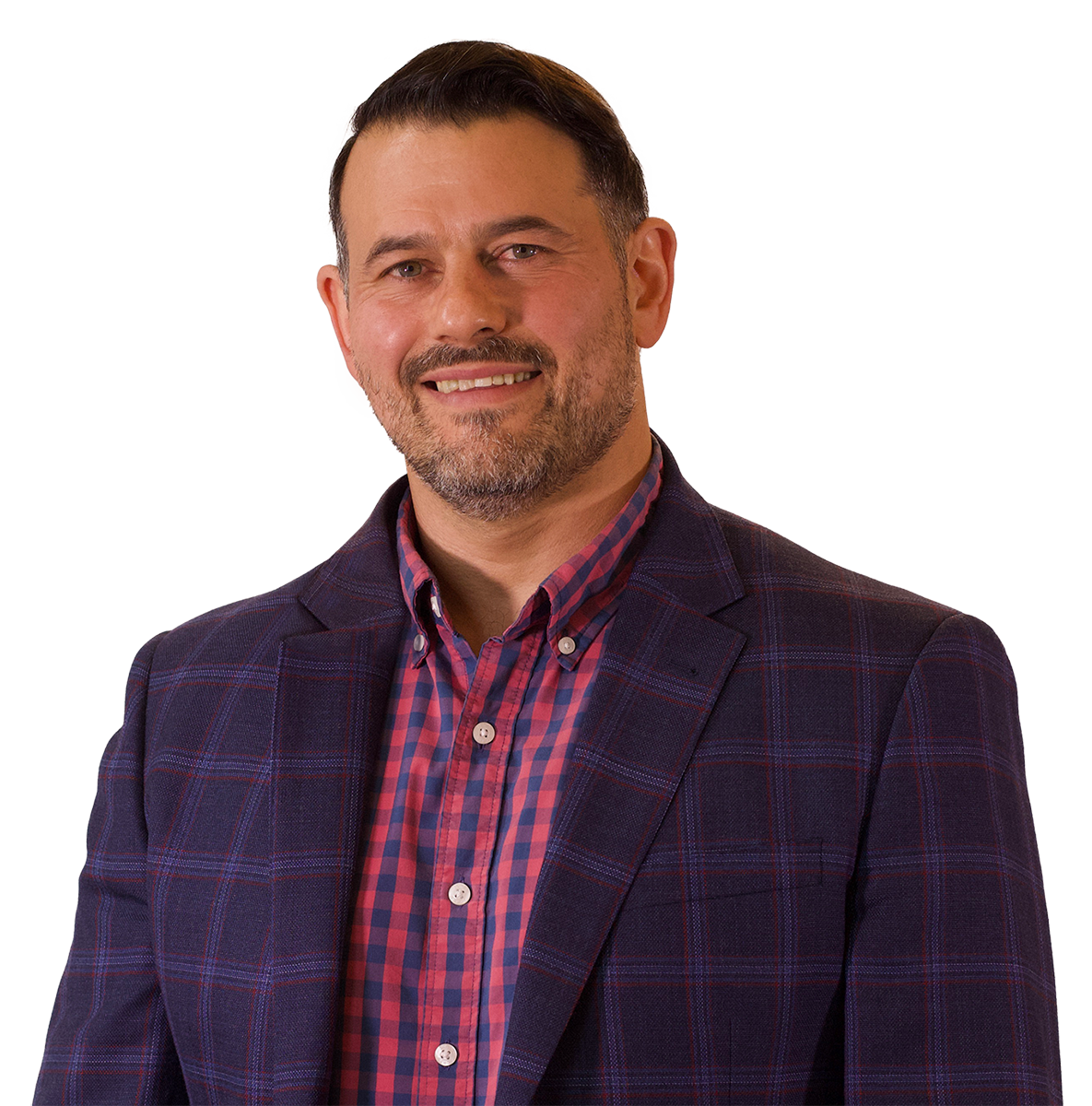
Amit Bernstein, Professor of Counseling Psychology
A long way home
Born in Israel, Bernstein has crisscrossed the globe, several times over, in his route to Madison and back again. After graduating from UW–Madison, he was at first unsure what to do with his freshly-minted degree in psychology. He found himself quite literally at sea—traveling the world and ultimately taking a job on a yacht sailing around Southeast Asia.
To his surprise, he soon realized that what inspired him most wasn’t the vastness of the open ocean but the depths of the inner mind. “Despite the fact that working on a boat was a childhood dream, the only thing that interested me was the personalities and interpersonal dynamics of the crew,” he says.
Leaving the seafaring life behind, he returned to the U.S. for grad school, earning a PhD in clinical psychology at the University of Vermont followed by a postdoctoral fellowship at Stanford University and the Palo Alto VA.
Then came another inflection point. As Bernstein searched for a new academic home to begin his career, he found himself looking for a challenging environment that would require innovation and creativity and where his work might develop a social impact mission. He decided to return to his childhood home in Israel where he took a position in the Department of Psychology at the University of Haifa.
Looking inward
Over the next 15 years, Bernstein built a thriving research group and research program that spanned the theoretical and the practical, delving deep into the science of the mind and then using insights from that work to guide interventions for healing and growth.
“Ultimately, what has truly interested me is understanding the form and function of each person’s own internal mental life in suffering and flourishing.”
– Amit Bernstein, PhD
One pillar of this work, called the Looking In project, builds on cognitive neuroscience to develop theory and methods to understand the mechanisms through which internal awareness—gained through contemplative practices like mindfulness meditation—shapes wellbeing and mental health.
A new paper published in Annual Review of Psychology, a flagship journal of the field of psychological science, exemplifies this work and envisions how its fundamentals can be leveraged by a broader scientific community. “We are working to reveal the precise mechanisms by which mindfulness meditation may have beneficial effects and thereby guide translational science to optimize and personalize novel therapeutics,” says Bernstein.
Finding impacts
From this focus on healing grew a second pioneering research program, which came to be known as the Moments of Refuge project.
Today, over 120 million people are forcibly displaced by war, persecution, and climate disaster, often enduring unimaginable trauma, loss, and chronic stress. Forced displacement on this scale poses not only a humanitarian crisis but also a global mental health crisis.
Studying mindfulness in Israel offered a ready opportunity to serve refugees and survivors of conflict and collective trauma. “In light of my collective and family ancestry, and the complex and sacred place where I found myself living and working, it seemed like the universe was telling me that this is something that I should be doing,” says Bernstein.

A few snapshots of Amit Bernstein's pervious team and work with displaced people.
In search of innovations to break through seemingly impermeable realities, Bernstein and colleagues began to, once again, look in for therapeutic solutions. His group discovered that mindfulness-based interventions can be used to train refugees and asylum-seekers to generate moments of refuge, characterized by awareness, agency, and safety.
“By training refugees to engender these momentary states of refuge, we are able to train the mind to access an intrinsic capacity to adapt, to be resilient, and to heal,” says Bernstein. “We began to study this mechanism and how, despite really impossible life conditions, repeatedly experiencing these healing moments of refuge allows refugees to begin to recover from the trauma and chronic stress that are endemic to forced displacement.”
In a recent paper published in Mindfulness, his team presents the results of an innovative effort to make these moments of refuge more accessible through a mobile health adaptation of their group-based mindfulness program.
A new chapter
After 15 years cultivating his research program and raising his three kids in Haifa, Bernstein and his wife decided it was time to explore new opportunities and challenges. Seeking a new intellectual environment in which to be inspired and challenged to learn and grow, the family departed for a sabbatical in the U.S. in the Spring of 2023, just a few months before the October 7 attack on Israel and tragic war in its wake.
UW–Madison and CHM quickly became a new home and the new chapter that Bernstein and his family were hoping to find. In addition to offering a fitting environment for his research program, he sees UW–Madison as a place where his whole family can flourish.
“One thing that was really important in our family decision making was that we hoped to find not only an intellectual home for my work, but more importantly a home for our kids that was safe, welcoming, open and multicultural—a place where they can grow and thrive,” Bernstein says. “We are so grateful that Madison is that kind of community.”
Thinking big
Now, with a permanent position on the CHM faculty and relocation of his Observing Minds Lab to CHM, Bernstein has big aspirations for growing his basic and theoretical work and scaling mindfulness-based interventions for greater impact.
Perhaps most pressing, he and his group are now beginning the implementation of an innovative post-war mindfulness-based collective trauma recovery program—The Shared Healing Project—in Arabic and Hebrew. Part of the global scaling of Moments of Refuge, this will become one of the first sites, now centered at CHM, that aspires to promote recovery and flourishing, and mitigate intergenerational transmission of trauma, among survivors of conflict, collective trauma, and forced displacement.
One of the major strengths Bernstein sees in CHM is its position at the nexus of multiple intellectual communities housed within a remarkable university ecosystem. This creates fertile ground for multidisciplinary work that can unlock insights and applications beyond the constraints of a single field.
For example, he emphasizes that the workings of our inner life are inherently complex, dynamic phenomena that unfold across different timescales, yet the empirical studies and even theories we use to examine them are often quite modular. In an upcoming paper published in American Psychologist, Bernstein and his students propose a novel multi-disciplinary approach to the study of mindfulness and meditation grounded in complexity science and dynamical systems theory, which Bernstein believes can help unlock basic science and therapeutic breakthroughs.
As he becomes more connected with the campus community, Bernstein is excited about the ways his research will stretch and grow in this new environment, broadening the sophistication and impact of his work locally and globally.
By Anne Johnson
Latest News

Exploring the Science of Wellbeing: The Healthy Minds Framework Explained
October 8, 2026
The Healthy Minds Framework, a groundbreaking scientific model first outlined by experts from CHM, identifies the core pillars of wellbeing:... Learn More >

Find your purpose in 4-minutes | Dr. Cortland Dahl
October 1, 2026
Dr. Cortland Dahl shares how reflecting on the people who inspire us can help clarify our values, strengthen our sense of purpose, and guide how we... Learn More

OnWisconsin: Could a Workout Before Therapy Make Your Session More Effective?
September 29, 2026
CHM-affiliated faculty member Dr. Jacob Meyer, with support from Dr. Simon Goldberg, explores how exercise before therapy may improve engagement... Learn More