
Beyond the Data: Get to Know CHM Scientists Ross Jacobucci and Brooke Ammerman
Get to know these Center for Healthy Minds experts better and learn about their potentially life-saving research.
February 24, 2026
Center for Healthy Minds (CHM) Research Assistant Professor Dr. Ross Jacobucci and CHM Affiliated Faculty member Dr. Brooke Ammerman have co-authored a flurry of interesting papers at the Center for Healthy Minds. Several of their papers investigate nighttime smartphone behaviors and suicide risk. In one of the three studies that were published, they used millions of smartphone screenshots and AI to predict suicide risk in adults the next day.
As colleagues, they complement each other by bringing together highly analytical and human sides of the issues they research. Ross has a background in machine learning and intensive longitudinal analysis, while Brooke brings study design experience and a clinical psychology background that focuses on understanding risk and protective factors. They also make a great team outside of the office as a married couple, who moved to Madison, WI, with their two dogs, around 2024.
We had a chance to speak with Brooke and Ross to get to know them better, understand what donor support means to their work and discuss the in’s and out’s of their potentially life-saving research.
Q&A
CHM: Why did you center your latest research around suicide risk prevention and smartphone use? What’s the ultimate vision or goal in studying this topic?
Ross: We have both been interested in the dynamics of suicide risk for a long-time, as there is research that suicide risk can fluctuate at even the minute level.
We centered this specific part of our work on smartphone use because phones are where so much daily life happens: connection, conflict, coping, sleep disruption, and exposure to stressful content, often in the exact moments risk is shifting.
We also know there’s a functional limit to how often we can ask people to complete surveys without creating burden, so screenshot capture (every 5 seconds while the phone is in use) lets us understand what’s happening in real time at a finer time scale than self-report alone. Our ultimate goal is to use that high-resolution picture of everyday digital life to improve suicide prevention by identifying higher-risk windows more precisely and informing timely, person-centered supports that can complement, rather than replace, traditional clinical care.
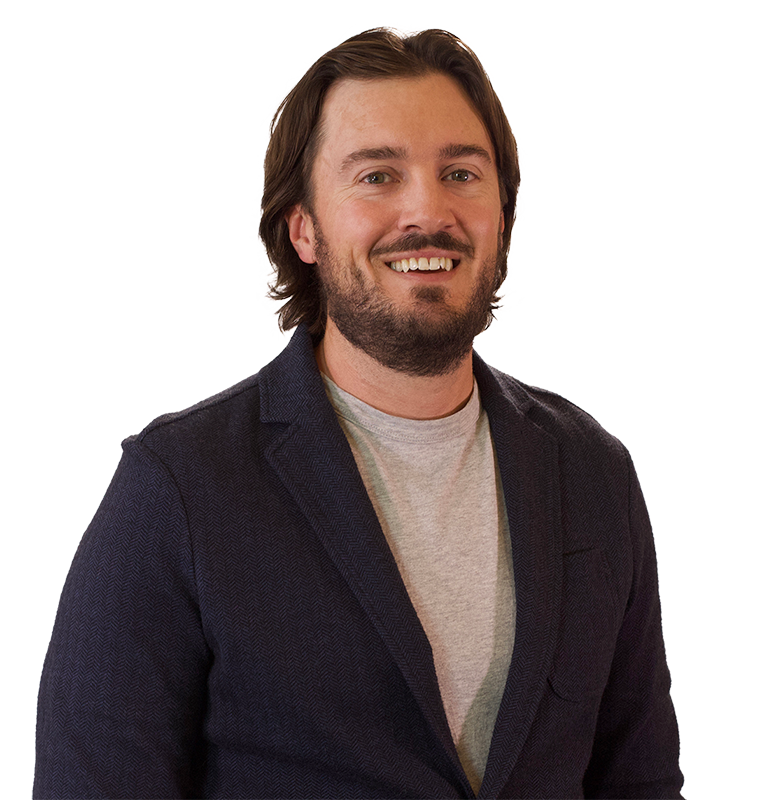
Dr. Ross Jacobucci, CHM Research Assistant Professor
CHM: Suicide and suicide risk hits home for many people. What drives you to research suicidality?
Brooke: What drives us is the combination of how common suicide exposure is and how isolating suicidal thoughts can feel. Suicide touches far more people than many realize, about 2 in 5 U.S. adults say they know someone who died by suicide – and both Ross and I have lost someone in our family to suicide. Beyond the personal impact, the larger ripple effect is part of what makes this work feel urgent.
At the same time, we know many people who are struggling face real barriers to getting help, especially stigma and fear of judgment or consequences if they disclose what they’re going through. So the motivation is to contribute research that helps us understand suicide more clearly and compassionately, because better understanding is a necessary step toward better conversations, earlier support, and prevention approaches that meet people where they are.

Dr. Brooke Ammerman, CHM Affiliated Faculty
CHM: You moved to Madison, WI, in 2024 to work at UW–Madison. What have you discovered about the area that you think the rest of the world should know!?
Ross: I don't know this for sure, but I think UW might be the only high-level research institution in the country where you can have a ten-minute commute and pass genuinely good fishing and golf on the way to and from work. I can leave the office, be on Lake Wingra in a kayak with a line in the water in minutes, and hear a lion roar from the zoo. Try doing that at most R1s [high-level research universities].
Brooke: I’ll admit that I’m pretty food-motivated, whether that means trying a new spot or planning my week around what I want to cook, so one of my favorite surprises about living here is how much Madison is a “big-little” city. You get the kind of creative, high-quality, food-and-drink scene you’d expect in a much larger place (including chefs and bartenders who’ve earned recognition from the James Beard Foundation), but it’s all still genuinely accessible and easy to enjoy. And the local food culture is so strong that in peak season you can basically shop your way through the week, with a different (and impressive) farmers market almost every day of the week.
CHM: When you’re not working, what do you like to do in your free time? (Both separately and together.)
Together: Together, we love exploring Madison: trying new restaurants and coffee spots, and spending time in the parks, usually with our dogs.
Ross: I really enjoy most things outdoors. Hunting, fishing, cycling, and golf. Like Madison being a great place for fishing, it, along with Wisconsin generally, is great for golf.
Brooke: When I’m not working, I’m usually doing something active, primarily running, but I also love yoga. I’m happiest outside, too, especially backpacking and long hikes when we can get away. I also try to lean into creative hobbies, like photography and cooking, because they’re a fun counterbalance to how analytical my work can be.

Ross Jacobucci and Brooke Ammerman enjoy time in nature with their dogs Duke and Gus at Blue Mounds State Park in Mt. Horeb, WI.
CHM: What keeps you passionate about your work?
Ross: The challenge. We're building tools right now that I couldn't have imagined five years ago, fully automated systems that can learn from how someone uses their phone, analyze their facial movements and voice content, and generate a real-time risk score without ever asking the person to fill out a survey. And we're at a point where these tools are finally catching up to the complexity of the problem. We can improve how we assess suicide risk, dramatically decrease the burden on the people we're studying, and capture fluctuations in real time that static measures miss entirely. Each of those is a hard problem, but they're all solvable now. And honestly, that's how we work. We start with the problem, often with no idea how we're going to solve it, and figure it out along the way. That's what keeps me going.
Brooke: What keeps me passionate is the potential for this work to make a real difference in how people get support when they need it most. As a clinical psychologist, I’ve worked closely with individuals who struggle with suicidal thoughts and behaviors, and I’ve seen how hard it can be to seek help because of stigma, fear of consequences, practical barriers, or simply not knowing how to put what you’re feeling into words. That’s why it’s incredibly motivating to do research that could translate into earlier, more accessible, and more compassionate pathways to care.
If we can better understand when risk is rising in someone’s real daily life and design supports that meet them in that moment, without placing extra burden on them, then we have a chance to improve not just prediction, but the lived experience of help-seeking and the reach of prevention.
CHM: You’ve published several papers related to smartphone use and suicide risk prediction. What has surprised you about the results and why?
Brooke: What has surprised me most is just how non-uniform smartphone use is (“more screen time” isn’t a meaningful story on its own). As Ross mentioned, we found that late-night phone use (roughly 11 PM–1 AM) was consistently linked with higher next-day suicidal ideation and planning, but when we saw signs of more active engagement during the middle of the night (about 1–5 AM), that pattern was actually associated with lower next-day suicidal ideation.
It reinforces the idea that what someone is doing on their phone and when they’re doing it may matter far more than the total minutes. Active connection or purposeful coping can look very different from passive consumption, especially during vulnerable hours. It also really highlights how much more we have to learn about how smartphone use fits into people’s lives.
Ross: The late-night phone use surprised me the most. Not just the sheer number of participants who were repeatedly using their phones during what they self-reported as their sleep window, but the nuance in how they were using them.
Going in, you'd reasonably assume that any phone use disrupting sleep would be a risk indicator, and for some types of use, that's true. But we found that late-night messaging was actually beneficial, presumably because it reflects social connection at a vulnerable moment. That was something I never would have predicted. And we're seeing this pattern replicate; in a separate paper currently under review, we found that while most forms of social media use were associated with increased risk, direct messaging again had a protective effect. It really reinforces that the distinction between passive consumption and active interpersonal connection matters far more than simple screen time metrics.
CHM: How do you hope your work will affect the world/other science around the world?
Ross: When you talk to people about their experiences with suicidal thoughts and behaviors, you're struck by the complexity, nuance, and variability of those experiences — no two people's paths look the same. My primary goal is for our research to match that reality. I want to build tools and methods that honor an individual's experience rather than reducing it to a single risk score or diagnostic label, and I believe that doing so will ultimately lead to interventions that reach the right person at the right time.
Brooke: In the long run, I hope our work helps save lives and makes life a little more livable for people who are struggling by helping support show up earlier, more compassionately, and in ways that actually fit day-to-day reality. I also hope it nudges systems to view suicide differently: less as a rare, unpredictable “crisis event” and more as a dynamic, treatable health problem that deserves the same seriousness, investment, and thoughtful infrastructure we bring to other major public health issues. On the science side, my goal is to give the field better tools to study suicide with more precision so we can move beyond one-time risk labels and toward understanding when risk shifts, what changes around those moments, and how to translate that knowledge into prevention that’s practical and truly person-centered.
CHM: What does donor support mean to your work?
Brooke and Ross: Donor support is hugely meaningful because it gives us the flexibility to move fast on the pieces of this work that are hardest to fund through traditional mechanisms, but are essential for real-world impact. It helps us launch early pilot studies, build and securely maintain the technology and data infrastructure needed for screenshot-based research, and related intervention work, and compensate participants for their time in ways that respect the burden of intensive studies.
Just as importantly, it supports the “human” parts of responsible suicide research: involving people with lived experience, strengthening ethical and privacy safeguards, training students and early-career scientists, and turning findings into resources that can actually reach communities.
In short, donor support helps us bridge the gap between promising science and practical prevention that can improve lives.
CHM: How can the Healthy Minds community support and follow your work?
Brooke: The easiest way to follow our work is just to stay connected to the Center for Healthy Minds, through the newsletter, social media, and community events, because that’s where updates on new studies, papers, and public-facing takeaways usually show up.
And if you’re looking for ways to support it, donor support genuinely matters: it helps us pilot new ideas, build and maintain the secure infrastructure this research requires, and translate findings into resources that can reach people beyond the lab. Finally, when we do recruit for studies, participating, or sharing those opportunities with others, is one of the most direct ways the community can help move the science forward — we want to make sure that our work represents all voices.
CHM: What else do you want people to know?
Ross: We do want people to know that we’re not trying to judge or “police” anyone’s phone use. The goal is to better understand what’s happening in someone’s daily life, especially in the moments risk can shift, so we can design support that’s timely, respectful, and actually helpful.
Support the Work & Make A Gift here.
By Victoria Vlisides, CHM Digital Content Editor
Latest News

Exploring the Science of Wellbeing: The Healthy Minds Framework Explained
October 8, 2026
The Healthy Minds Framework, a groundbreaking scientific model first outlined by experts from CHM, identifies the core pillars of wellbeing:... Learn More >
Find your purpose in 4-minutes | Dr. Cortland Dahl
October 1, 2026
Dr. Cortland Dahl shares how reflecting on the people who inspire us can help clarify our values, strengthen our sense of purpose, and guide how we... Learn More
OnWisconsin: Could a Workout Before Therapy Make Your Session More Effective?
September 29, 2026
CHM-affiliated faculty member Dr. Jacob Meyer, with support from Dr. Simon Goldberg, explores how exercise before therapy may improve engagement... Learn More